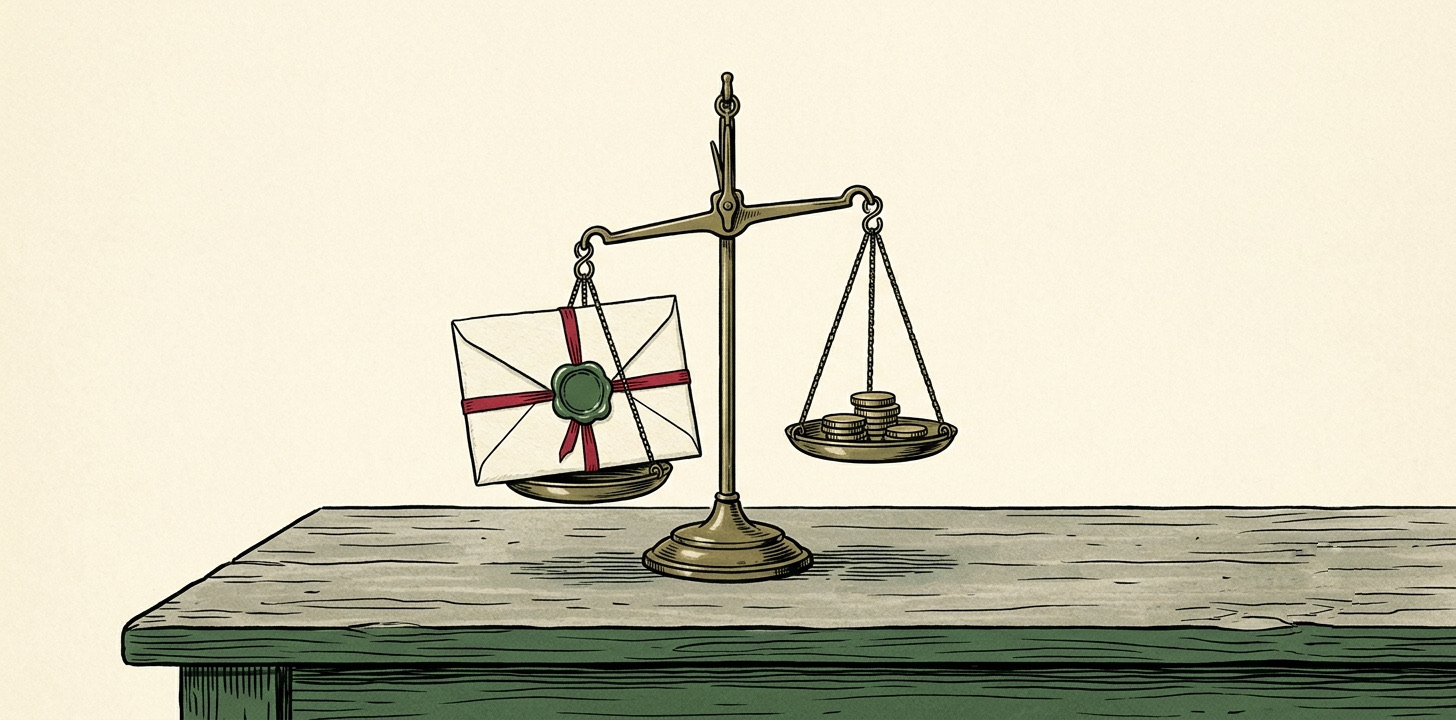

Agencies agonise over this like it’s a fork in the road. Do we give clients a live dashboard to log into, or do we send them a monthly report? Pick one, commit, move on.
It’s the wrong question. A dashboard and a report do different jobs, for the same client, at different moments. Choosing one and skipping the other doesn’t simplify anything. It just leaves a gap the client eventually notices.
What a report is good at
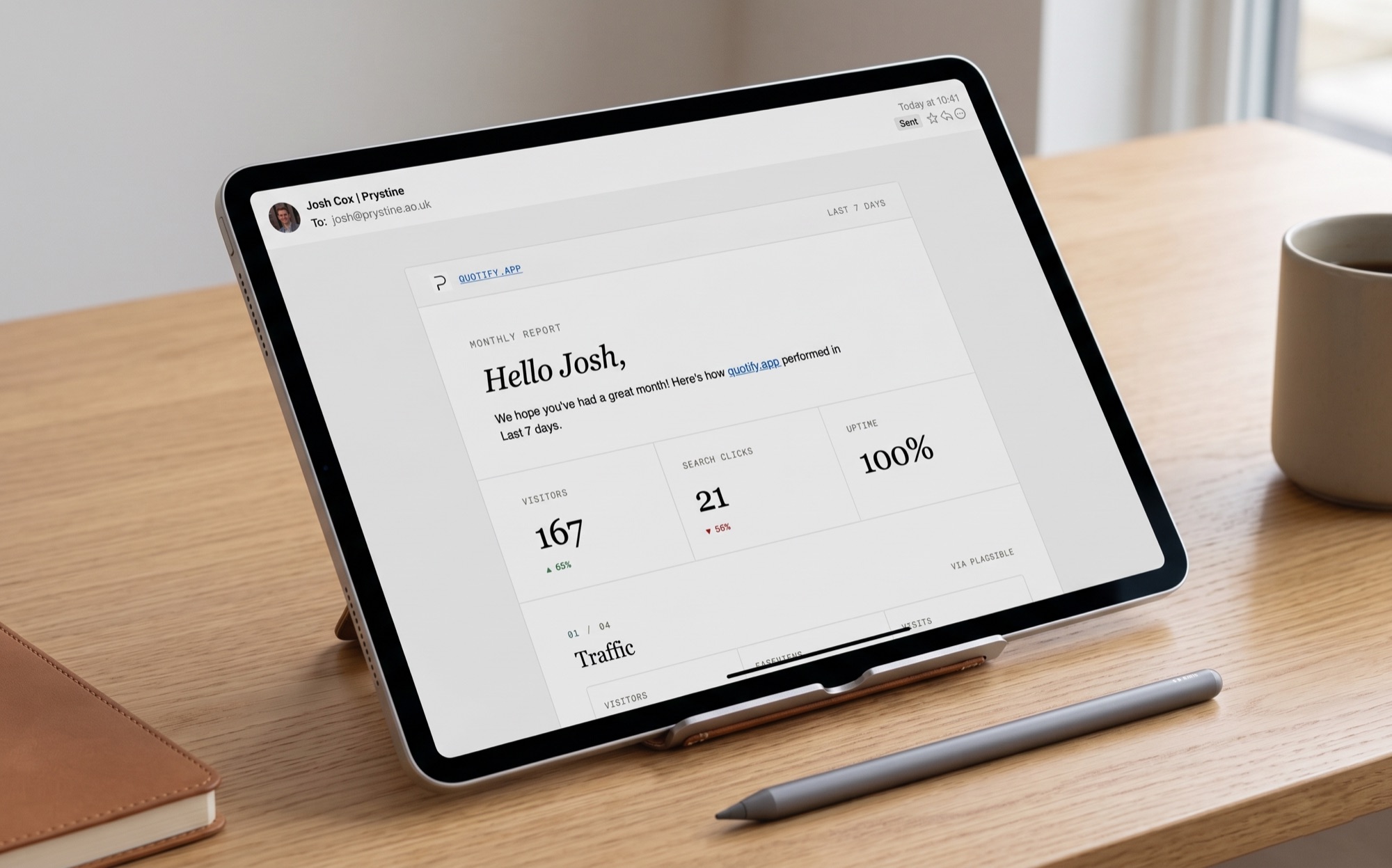
A monthly report is a fixed point. It arrives on the 1st, it says here is what happened last month and here is what it means, and then it sits in the inbox as a record. Its whole value is that it comes to the client, unprompted, written to be read in thirty seconds by someone who will never open an analytics tool.
The report is also a rhythm. One that lands every month becomes something the client expects and trusts. It’s the thing they forward to their boss, the thing they half-remember at renewal time when they’re deciding whether you’re worth it. A dashboard can’t do that job, because a dashboard waits to be visited, and most clients never visit.
What a dashboard is good at
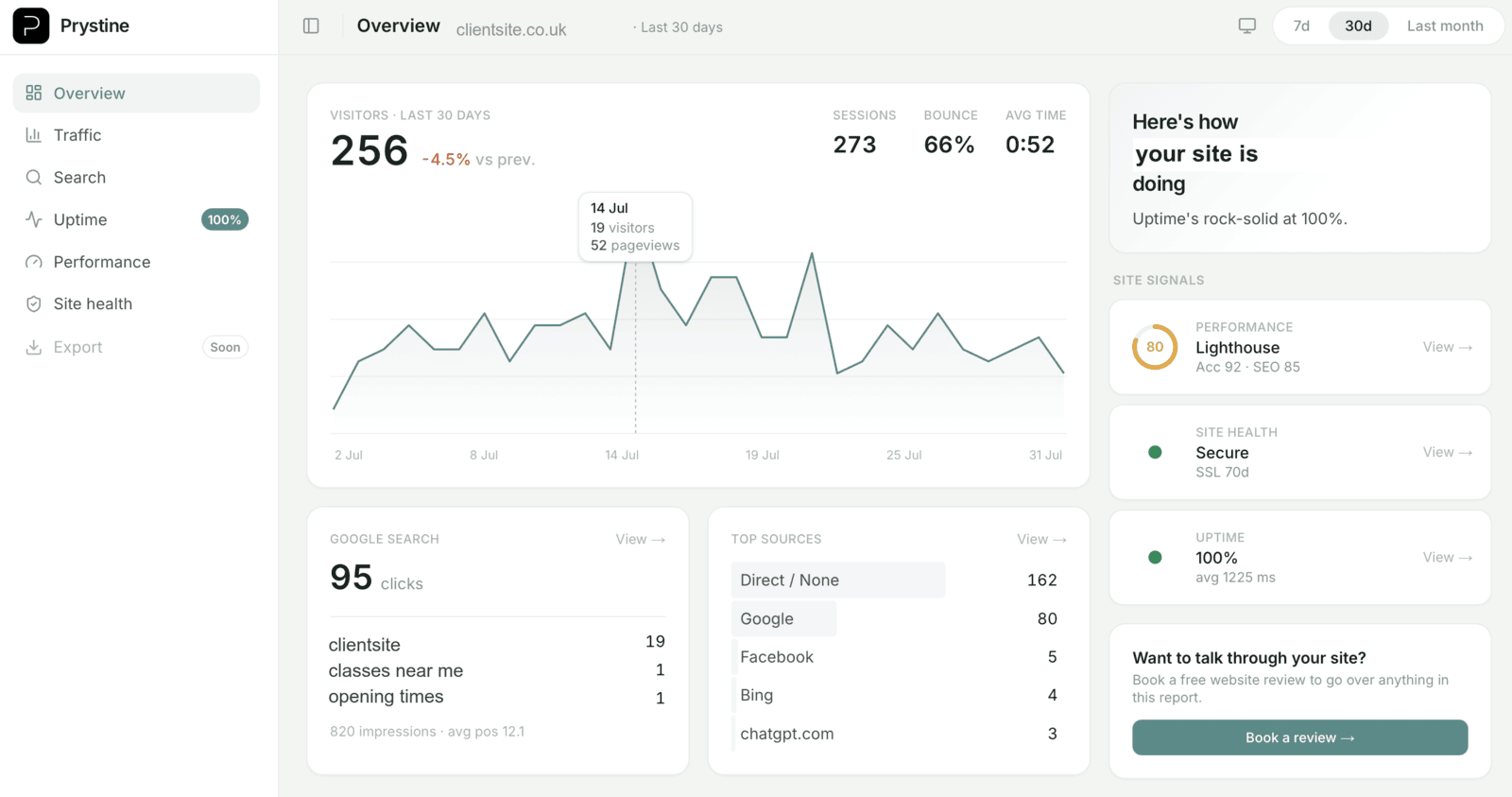
A live dashboard answers the question the moment it’s asked. A client gets a call from their boss, or has a hunch traffic is down, or just wants to check before a meeting. The report from three weeks ago can’t help them. The dashboard can, because it’s current to the minute.
That’s the job a report can’t do: right now. The report is true about last month. Some questions won’t wait for the 1st.
Why it isn’t either/or
The two aren’t competing. They’re the same numbers on two surfaces, each shaped for a different moment.
Pick report-only and you’ve got no answer for the client who wants to look today. Pick dashboard-only and you’ve built something most of your clients will never open, because a link behind a login is a link that gets ignored. The dashboard sits there, beautifully, unused, while the client quietly wonders what they’re paying for.
The honest version of client reporting is both. The report reaches the client who won’t log in. The dashboard serves the client who wants to check. And the report is what points people at the dashboard in the first place: a line in the email, a link they can open without a password, so the ones who do want to dig have somewhere to go.
The one that pulls the other along
Here’s the part that makes both work harder than either alone. The report arrives, the client reads it, and at the bottom there’s a way straight through to the live view. No account, no password, just a tap. The people who only ever wanted the headline got it. The one or two who wanted more found the door already open.
You’re not asking the client to choose how they’d like to be reported to. You’re giving them the letter and leaving the window open beside it.
That’s how SendTidings is built: a plain monthly report that lands in the inbox, and a live, white-labelled dashboard the client opens from a secure link, no login. Same numbers, both surfaces, one flat price. See the plans, or meet the dashboard and the report.
— Josh